German Gelateria Complaints Reopen 2002 Catarinense Exodus
German report exposes abusive work hours for Brazilians in ice cream shops, reviving a debate on the Catarinense exodus documented by Insieme 24 years ago.
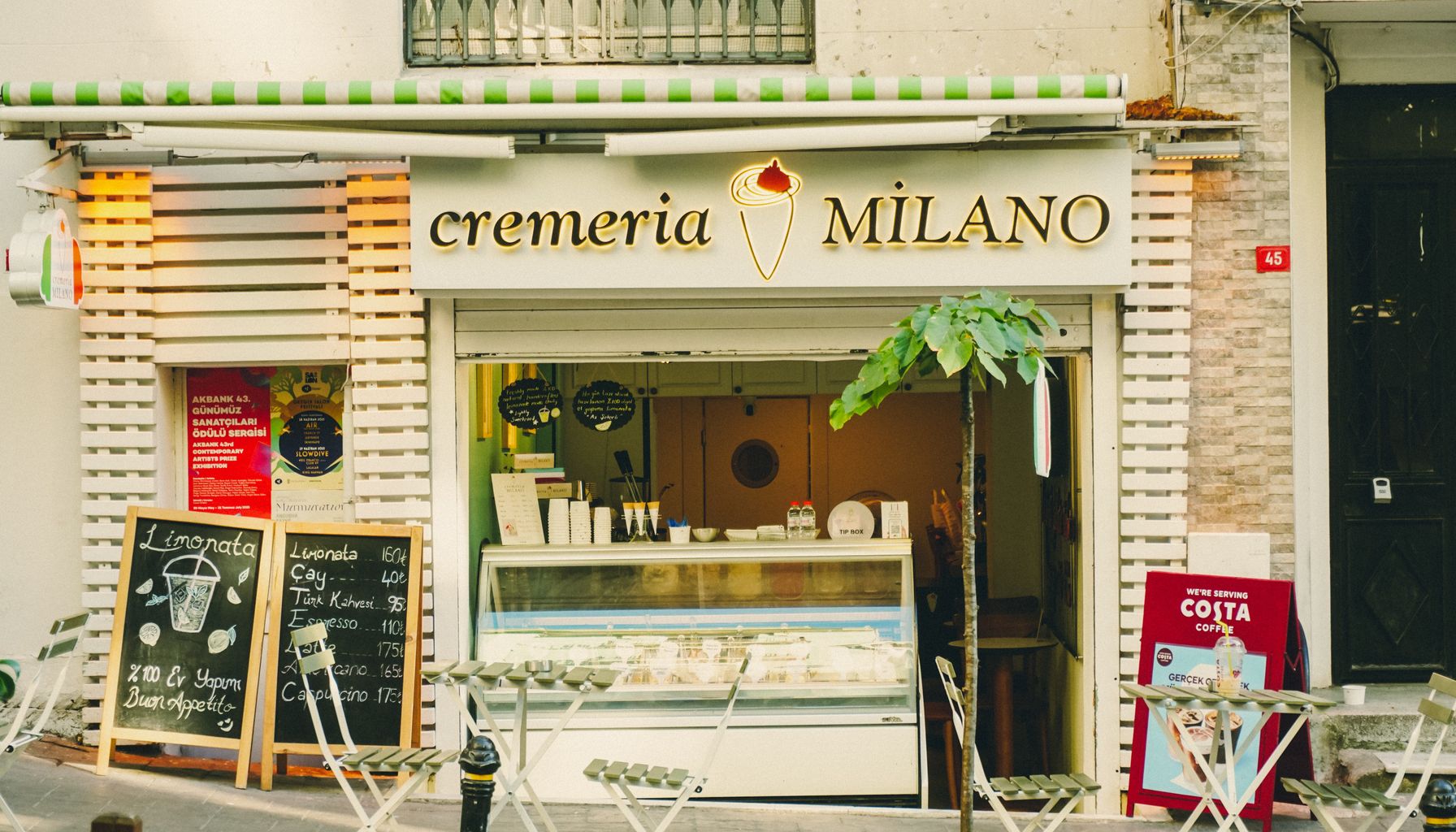
A report published in Germany about working conditions in artisanal gelaterias has reignited, over the past few weeks, a debate that the Italian-Brazilian community of southern Santa Catarina knows well. Allegations of excessive work hours and pay incompatible with hours worked, involving mostly Brazilians of Italian descent from Urussanga and the surrounding region, made waves in the European press — but the migratory phenomenon behind these stories had already been documented by Insieme magazine back in 2002.
What the German report reveals
The Süddeutsche Zeitung Magazin published, on August 20, an extensive report on the working conditions of Brazilians in artisanal ice cream shops in Germany. According to the article, workers reported shifts of 12 to 14 hours a day, weeks totaling up to 80 hours of work, and only one day off, with pay described as incompatible with the volume of hours worked.
One of the workers interviewed by the German publication said he felt "treated like a slave" — a personal statement from the worker, not a legal conclusion or formal classification made by the report itself. Most of the accounts cited involve Brazilians from Urussanga, in southern Santa Catarina, a region historically linked to migration into Europe's gelateria sector.
Following this, Rai News expanded coverage of the case in a story published on August 24, with a headline mentioning "thousands of Brazilians" in this situation. However, the original Süddeutsche Zeitung Magazin text refers to "some" accounts of irregularities, not a generalized number of thousands of cases — an important distinction between the source report and how it was subsequently covered.
The root of the phenomenon: Insieme was already reporting on it in 2002
What the German report brought to light in 2026 is, in fact, nothing new for those who follow the Italian-Brazilian community of southern Santa Catarina. According to Insieme, issue number 41, published in May 2002, already featured as its cover story the exodus of young people from municipalities such as Urussanga, Siderópolis, Cocal do Sul, and Criciúma toward Europe.
An editorial in that same issue, titled "Stopping the Exodus," noted that many applications for recognition of Italian citizenship came from candidates who, shortly after obtaining their passports, ended up working as ice cream makers in Germany. Estimates at the time, according to Insieme, indicated that the departure of workers from the region could reach as much as 20% of the local economically active population — a figure that highlights the scale of a migratory phenomenon that has now persisted for more than two decades.
The role of Italian citizenship in the migratory flow
Insieme reports that, back in 2002, then-consul Mario Trampetti traveled to Nova Veneza, Criciúma, and Urussanga to address the issue directly with local leaders. On that occasion, he asked business owners in the province of Belluno, Italy, to rehire workers who already held Italian passports, in an attempt to reorganize the migratory flow that was taking shape.
Years later, in 2005 and 2007, the same consul spoke out again on the subject, calling the recognition of citizenship an "instrument of emigration" — an expression that, according to Insieme, directly linked the acquisition of Italian documentation to Brazilians leaving for Germany, the United States, and England in search of work. The consul's account reinforces that citizenship, historically, has functioned not only as recognition of family origin but also as a gateway to the European labor market.
From employees to business owners: the community's evolution
The flow that began as an exodus of workers seeking opportunities has undergone significant transformations over the past two decades. In October 2024, an Insieme report estimated that more than 2,000 Italian-Brazilians from southern Santa Catarina were working in gelaterias in Germany and other European countries.
A significant portion of these workers are descendants of Zoldano immigrants — natives of Val di Zoldo, in the province of Belluno — who emigrated to Santa Catarina more than a century ago and today, in a reverse movement, are returning to Europe. According to Insieme, many of these professionals have moved beyond being mere employees and have become owners of their own ice cream shops, building entrepreneurial careers within a sector that, decades earlier, had welcomed them as seasonal labor.
This cycle — from Italian immigration to Brazil, to citizenship recognition, and later emigration of descendants back to Europe — continues to be closely followed by those who cover news from Italy and the unfolding lives of Brazilians on the European continent. For those looking to better understand the procedures and required documentation, information about Italian citizenship and about life in Italy helps put into context why so many families from Santa Catarina have followed this path.
The current allegations published in Germany, therefore, do not describe a new phenomenon, but rather reopen a chapter of a migratory history documented more than two decades ago — a journey that has spanned generations, from the application for recognition of Italian citizenship to the consolidation of a community of Brazilian workers and entrepreneurs in Europe's artisanal ice cream sector.
Want to know if you're entitled to Italian citizenship? Talk to a specialized Italian citizenship advisory service or learn about certificate search services in Italy.
Source: Insieme