Italian Healthcare System: Guide for Residents in 2026
Learn how the Servizio Sanitario Nazionale works: registration, family doctor, tessera sanitaria, and costs for those living in Italy in 2026.
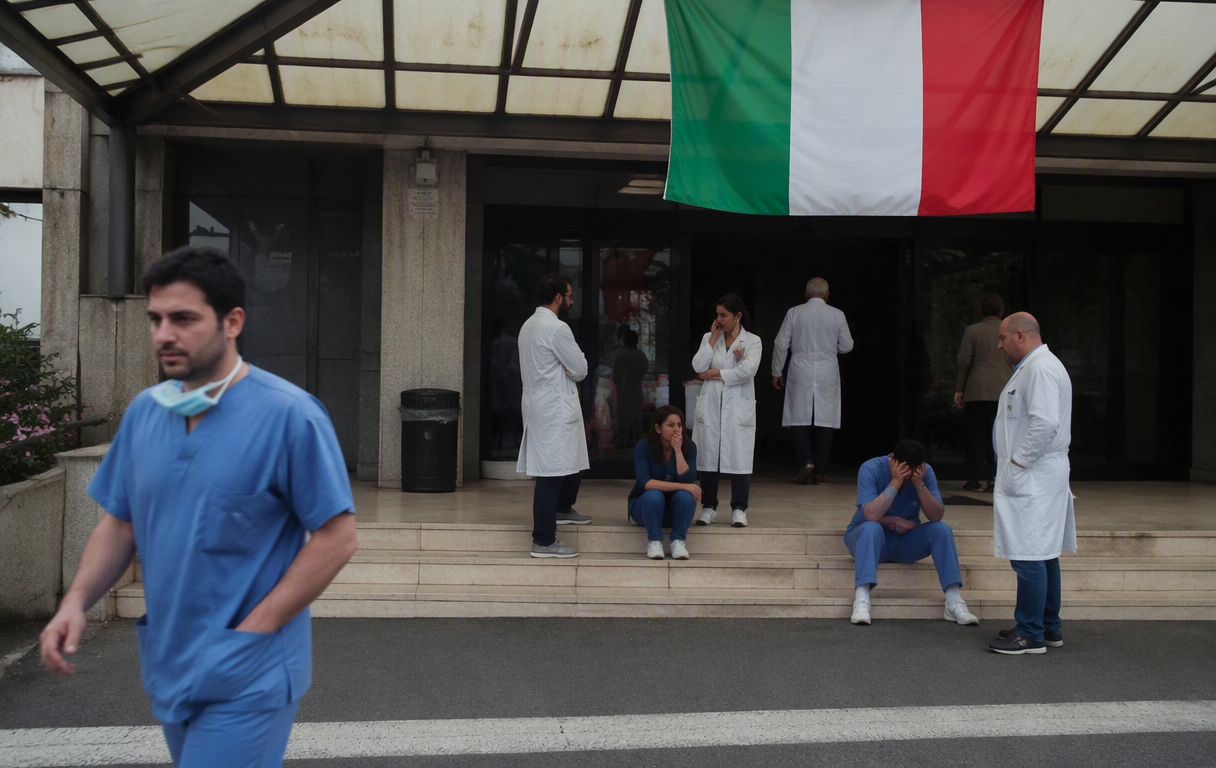
Anyone moving to Italy needs to quickly understand how the Servizio Sanitario Nazionale (SSN) works, the country's public healthcare system. For Brazilians who arrive to live there, whether for work, study, or after obtaining Italian citizenship, registering with the SSN is one of the first administrative steps to take care of — along with residency and the codice fiscale. This guide explains the step-by-step process, the costs involved, and the regional differences every resident should know about in 2026.
What is the Servizio Sanitario Nazionale (SSN)
The SSN was created in 1978, inspired by the British model, with the principle of guaranteeing universal access to healthcare for all residents in Italian territory, regardless of nationality or income level. The system is financed mainly through taxes and is managed in a decentralized way: the Ministero della Salute sets national guidelines, but each region has autonomy to organize its own healthcare network, which explains why a patient's experience in Milan can differ from that of a patient in Calabria.
Unlike private health insurance plans, the SSN does not charge users a direct monthly fee — funding comes from general tax revenue. Private plans (called assicurazioni sanitarie private) work as a complement, usually purchased by those looking to reduce wait times or gain access to specialists and specific facilities.
The following are entitled to access the SSN:
- Resident Italian citizens;
- Resident European Union citizens;
- Foreigners with a valid permesso di soggiorno for work, study, family reunification, or other purposes that involve residency;
- Undocumented immigrants, who are entitled to emergency care and some essential services through the STP code (Straniero Temporaneamente Presente).
Those who obtained Italian citizenship through descent and go on to reside in the country have the same rights as any native-born citizen, with no need to prove employment status to register. To better understand the possible paths to recognition, it's worth checking out the content on Italian citizenship available on the portal.
How to register with the SSN as a resident
Registration with the SSN is done at the ASL (Azienda Sanitaria Locale) in the area where the person resides, and it is mandatory for anyone settling in the country long-term. Before going to the ASL, you need to have on hand:
- Residency registered with the comune (the well-known atto di residenza, obtained after a visit from the polizia locale to confirm the address);
- Codice fiscale, a document equivalent to the Brazilian CPF, issued by the Agenzia delle Entrate;
- A valid permesso di soggiorno (or the application receipt, depending on the case) for non-EU citizens, or an Italian/European ID document for those who are already citizens.
The general step-by-step process is:
- Schedule an appointment at the local ASL office (in many regions, scheduling can be done online);
- Bring original documents and copies;
- Fill out the form to choose a family doctor (medico di base);
- Receive the tessera sanitaria, the card that identifies the patient in the system and is used for all appointments, tests, and prescription pickups.
The time it takes to issue the tessera varies by region, but it usually takes a few weeks. While waiting for the physical card, the ASL generally provides a provisional document that already grants access to services. Those organizing their move to Italy can find other practical guidance in the portal's guide to life in Italy.
The tessera sanitaria and the family doctor
The tessera sanitaria is the card that proves enrollment in the SSN and contains the patient's tax identification number. It's required to schedule appointments, pick up prescriptions, and receive care at any public healthcare facility in the country.
Upon registering, the resident chooses a medico di base (family doctor) from among the professionals available in their area — the choice is usually made from a list provided by the ASL, based on available openings. The family doctor is the first point of contact for practically any health issue: they assess symptoms, prescribe medication, order tests, and, when necessary, refer the patient to specialists (visite specialistiche) or more complex exams.
It's important to understand the limits of this role: the medico di base does not perform specialized procedures nor replace hospital care in serious cases. They act as a triage and ongoing care point, and are essential for obtaining referrals — without a referral (impegnativa), many tests and specialist appointments cannot be scheduled through the SSN.
Appointments are usually scheduled by phone, in person at the office, or, in a growing number of regions, through apps and online portals run by the local ASL.
Costs, fees, and exemptions
Although the SSN is funded through taxes, some services require payment of a fee called the ticket sanitario. This fee is charged, for example, for imaging tests, specialist consultations, and some outpatient procedures. Amounts vary by region and type of service, but tend to be significantly lower than the cost of the same care in the private sector.
The following are already free of charge, among others:
- Appointments with the family doctor;
- Care at the pronto soccorso classified as urgent;
- Vaccines included in the national schedule;
- Prenatal care and certain preventive tests.
There are also cases of fee exemption, granted based on:
- Low household income, according to brackets defined annually;
- Age (young children and, in some cases, seniors above a certain age, combined with income criteria);
- Chronic or serious health conditions, such as certain rare, oncological, or disabling diseases, which grant the right to specific exemption codes;
- Pregnancy, for tests and appointments related to prenatal care.
The exemption must be requested and registered with the ASL, upon presentation of documentation proving eligibility for the category.
Urgent and emergency care
It's essential for residents to understand the difference between the two main points of care outside the family doctor's office:
- Pronto soccorso: equivalent to a hospital emergency room, intended for real emergencies and urgent cases — trauma, acute pain, severe symptoms. Care follows order of severity (triage by color codes), not order of arrival.
- Guardia medica: an on-call medical service available outside business hours (nights, weekends, holidays) for issues that aren't serious emergencies but can't wait until the next available appointment with the family doctor.
The emergency number in Italy is 112, unified across nearly the entire national territory, which dispatches an ambulance, police, or fire department depending on the reported need.
The practical recommendation is: serious symptoms, life-threatening situations, or accidents go to the pronto soccorso; issues that can wait a few hours but require medical evaluation outside business hours go to the guardia medica; routine appointments and follow-ups stay with the medico di base.
Private healthcare as a complement
Even with guaranteed access to the SSN, many residents — including recently arrived Brazilians — choose to purchase a private health insurance plan as a complement. The main reason is wait time: specialist appointments and certain tests through the SSN can take weeks or months, depending on the region and demand.
Private healthcare allows for much faster appointment scheduling, in addition to providing access to specific clinics and hospitals outside the public network. Among the best-known insurers in the Italian market are names like Generali, UnipolSai, and Allianz, with plans that vary widely in price depending on coverage, the insured person's age, and region.
For those with a health condition that requires frequent monitoring, or for those who simply prefer to reduce the wait for routine tests, it's worth evaluating the cost-benefit of a supplemental plan — without giving up SSN registration, which remains the mandatory and free base coverage.
Practical tips for recently arrived Brazilians
Some mistakes are common among those organizing their life in Italy for the first time:
- Putting off SSN registration: without the tessera sanitaria, access to appointments and subsidized-price medications is limited, and emergencies can result in higher charges.
- Not understanding regional differences: each region in Italy organizes its healthcare network differently, with its own timelines, online portals, and scheduling rules — what works in Rome may be different in Milan or Naples.
- Ignoring the role of the family doctor: many Brazilians try to schedule directly with specialists, skipping the medico di base, and end up finding out too late that a referral was required.
- Not keeping exemption documentation: those entitled to fee exemptions based on income or health condition need to keep their documentation up to date with the ASL.
Apps and portals run by regional ASLs have made it easier to schedule appointments and tests, as well as track digital prescriptions (ricetta elettronica). It's worth researching your own region's portal as soon as residency is formalized.
Those in the process of citizenship recognition who still depend on documentation from Italy may also need support locating records with Italian civil registry offices — a service offered by companies specialized in searching for records in Italy.
Understanding how the SSN works is an essential part of adapting to life in the country, both for those arriving for work and for descendants who move after having their citizenship recognized. Formalizing residency, the codice fiscale, and ASL registration right upon arrival prevents unexpected issues and ensures full access to healthcare services — free or subsidized — that make the Italian system a reference point for universal public healthcare. To stay up to date on more guidance about daily life in the country, the portal maintains updated content in the news about Italy section and in the space dedicated to Life in Italy.