Webb and Hubble Telescopes Reveal Stellar Nurseries and Dust Bubbles
Images from Webb and Hubble reveal galaxies and nebulae where stars form, such as NGC 4698 (55 million ly) and the LHA 120-N44 nebula with dust bubbles.
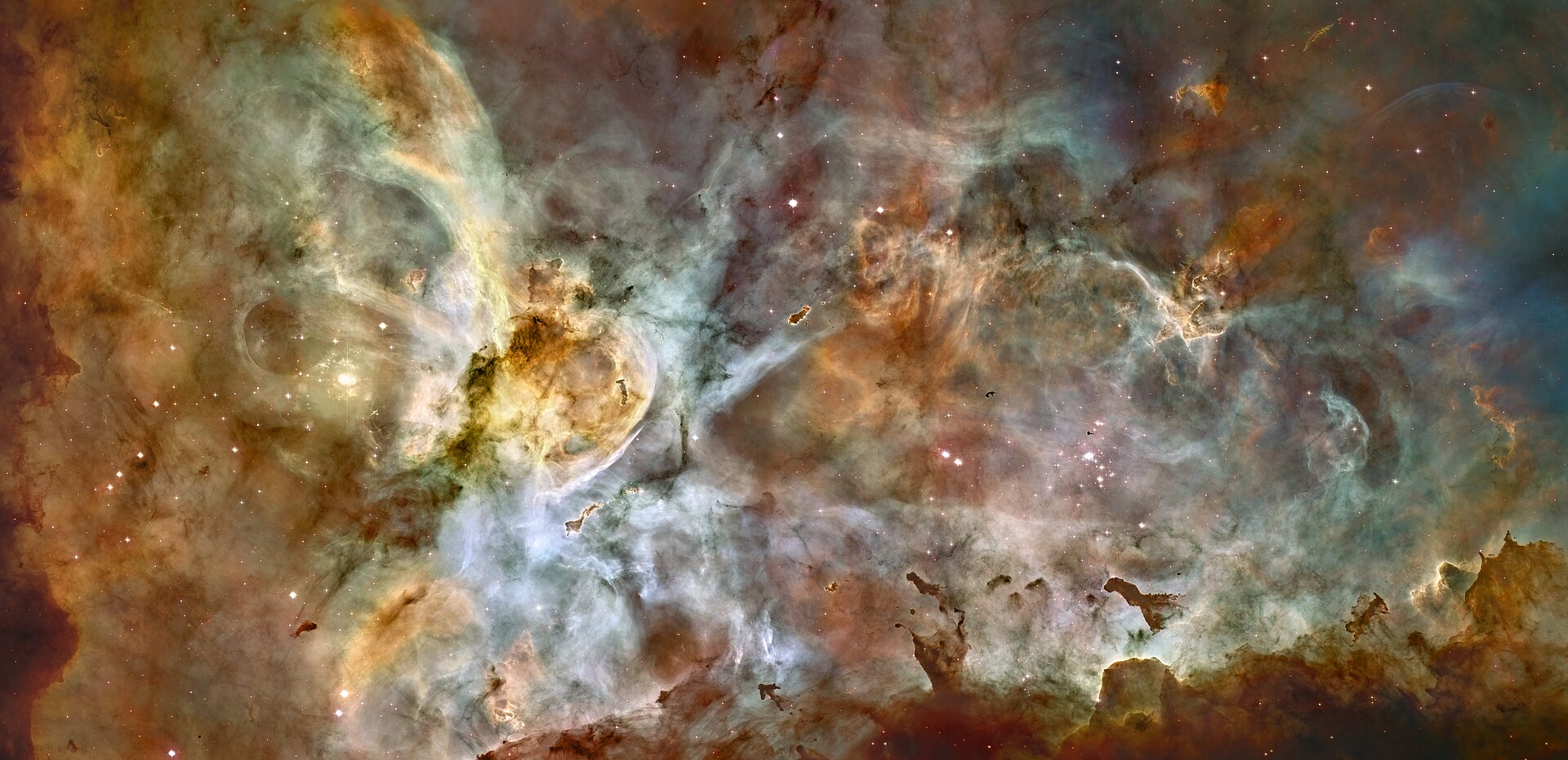
Images captured by the Webb and Hubble space telescopes reveal stellar nurseries and large dust bubbles in nearby galaxies and nebulae, showing unprecedented details of star formation and the interaction between gas, dust, and black holes, according to ANSA.
Key images and discoveries: Webb, Hubble, NGC 4698 and LHA 120-N44
The new images combine Webb's infrared reach with Hubble's optical resolution, highlighting the diversity of stellar nurseries and related structures.
In the galaxy NGC 4698, located about 55 million light-years away, observations highlight a core whose rotation is offset by 90° relative to the galactic disk. This misalignment may be the result of an impact or past merger with another galaxy, a process that reorganizes internal dynamics and can stimulate star formation. According to ANSA, the core houses a black hole that draws in large quantities of dust, creating conditions favorable to forming thousands of stars near the center.
In the Large Magellanic Cloud, images show the nebula LHA 120-N44 and an associated bubble known as LHA 120-N44F. These structures exhibit cavities carved by stellar winds and supernova shocks, where the interaction between intense radiation and dust grains creates bubble-like shapes and bright infrared filaments. The Webb+Hubble combination allows us to see both the hotter, ionized regions and the cold, dusty clouds where new stars are born.

Beyond these targets, the images include varied phenomena: gravitational lenses that magnify distant galaxies, systems with unusual morphologies, and vast bubbles of cosmic dust marking star-forming regions at different scales.
“Combined Webb and Hubble images offer a complementary view: Webb penetrating dust in infrared while Hubble details the regions most exposed in optical light,” according to ANSA.
Why this matters for Brazilian readers and Italian descendants
The discoveries have scientific and educational relevance that transcends borders and may interest readers in Brazil, including communities of Italian descent.
The dissemination of these images helps popularize concepts of star formation and galactic evolution in accessible language—topics present in school programs and outreach activities at Brazilian universities. For those following scientific and cultural news from Europe and international observatories, the images serve as educational and inspirational material.
Brazilian astronomy students and amateurs can benefit from these results when planning observations, joining astronomy clubs, or pursuing training in areas such as astrophysics, astrophotography, and science communication. The Raízes Italianas portal reinforces the need for Portuguese-language material to bring audiences of diverse backgrounds closer together; seeing images of targets like NGC 4698 and LHA 120-N44 strengthens the connection between science and culture.
For readers interested in Italian and European topics, the Webb and Hubble missions—results of international collaborations—illustrate the role of transnational scientific cooperation. News about science and technology often appears in sections like Notícias da Itália and also engages with Vida na Itália when discussing European research centers, universities, and cultural initiatives.
What the images reveal about star formation
Webb and Hubble images illustrate distinct stages of the stellar life cycle:
- Dust-rich regions visible in infrared, where cores collapse and proto-stars form.
- Cavities and “bubbles” carved by winds from massive stars and supernova explosions, which can both interrupt and stimulate star formation at the boundaries of dense cores.
- Galactic interactions (mergers and close passes) that redistribute gas and dust, triggering bursts of star formation and altering the dynamics of galactic nuclei, as observed in NGC 4698.
These processes are central to understanding how stellar populations in nearby galaxies formed and provide clues about the dynamic history of systems like NGC 4698.
Science communication and access to knowledge
Publicizing these data in accessible formats strengthens scientific culture and astronomy literacy. Portuguese-language content, contextualized for Brazilian audiences and Italian heritage communities, broadens the reach of discoveries and helps build bridges between international observatories and local educational communities. Those seeking to deepen their scientific citizenship and science education find related topics in reportage and guides; also see texts on Cidadania Italiana for administrative subjects relevant to diasporas, while general science news remains in the Notícias da Itália section.
Conclusion The Webb and Hubble images confirm that stellar nurseries are complex environments shaped by dust, stellar winds, black holes, and galactic interactions. For Brazilian readers, especially those interested in science and cultural connections with Europe, these observations offer rich material for education, inspiration, and science communication.
Source: ANSA